
Unpacking Mozart's K.89
Unpacking Mozart's K.89
This post explores the simplistic nature of Mozart’s Kyrie K.89, revealing the truth behind his early canonic compositions and their implications on his perceived genius.
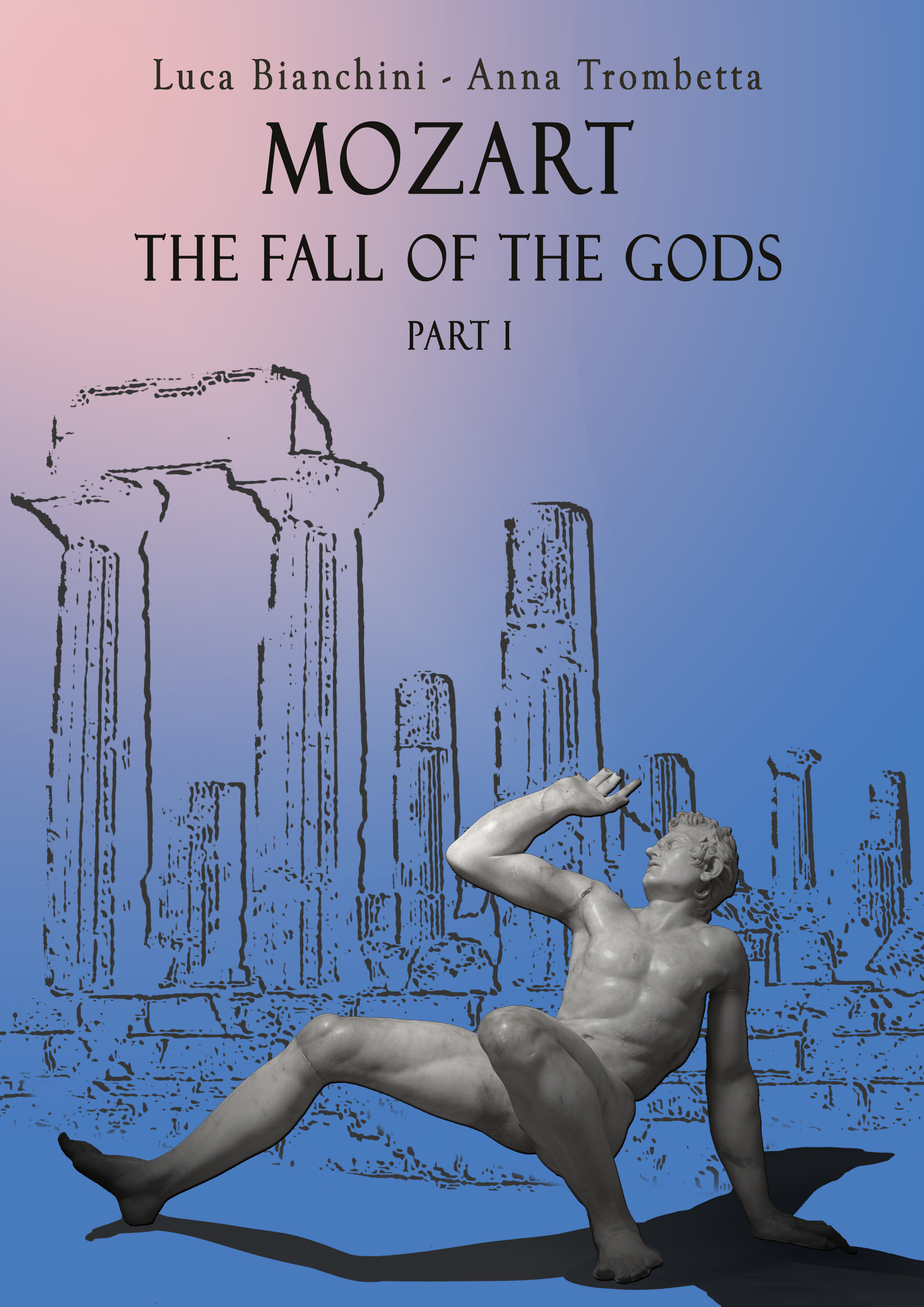
Mozart: The Fall of the Gods
This book offers a fresh and critical look at the life of Wolfgang Amadeus Mozart, challenging the myths that have surrounded him for centuries. We strip away the romanticised image of the “natural genius” and delve into the contradictions within Mozart’s extensive biographies. Backed by nearly 2,000 meticulously sourced citations, this work invites readers to explore a deeper, more complex understanding of Mozart. Perfect for those who wish to question the traditional narrative, this biography is a must-read for serious music lovers and historians.
"The incapacity to adhere to compositional rules illustrates the absence of a school and a teacher; mere imitation does not equate to mastery."
Mozart: The Fall of the Gods
When we think of Wolfgang Amadeus Mozart, the image of a prodigious genius often overshadows the reality of his musical development. One area of his work that deserves scrutiny is his treatment of canons, particularly in his Kyrie K.89. While canons are frequently seen as an entry point into the world of polyphony, Mozart’s versions reveal a stark simplicity that belies the complexities often associated with great composers.
The canon, a straightforward and rigorous compositional technique, is typically the first form grasped by children learning music. Yet, Mozart’s attempts at this form in his K.89 are fundamentally elementary, mainly employing unison voices and imitating the style of his supposed mentor, the Marchese de Ligniville. The notion that these canons serve as evidence of Mozart’s mastery of counterpoint is questionable, as his works primarily reflect a lack of deeper understanding rather than a profound artistry.
Many scholars, including Hermann Abert and Neal Zaslaw, have suggested that Mozart may have benefitted from Ligniville’s teachings during a brief stay in Florence. However, the reality of this mentorship remains vague, with only a few days available for instruction. The assertion that K.89 demonstrates Mozart’s familiarity with counterpoint is undermined by its reliance on copying rather than original composition. The piece consists of merely repeating simple motifs, leading to a product that lacks musical depth and sophistication.
The K.89 is essentially a pastiche, with Mozart replicating two-bar and three-bar phrases rather than crafting a genuinely innovative work. This method of composition results in a repetitive structure that fails to engage the listener on any meaningful level. Critics have noted that the final cadenza is riddled with compositional errors, indicating a lack of guidance and proper schooling in counterpoint.
Furthermore, the idea that K.89 should be held up as a testament to Mozart’s genius is misguided. The work serves as a reminder of the danger in romanticising his early output. While Mozart may have been adept at imitating others, true innovation and mastery require more than mere replication; they necessitate a comprehensive understanding of musical language and form.
In essence, K.89 stands as a historical curiosity rather than a hallmark of genius. It exemplifies the early stages of a composer still grappling with the fundamental principles of music rather than demonstrating an accomplished mastery of the craft.
You May Also Like

The Curious Case of Mozart’s “Lullaby”
Though long credited to Mozart, the lullaby “Schlafe mein Prinzchen, schlaf ein” hides a murky history. Initially published by Nissen, Constanze’s second husband, it has endured as one of Mozart’s supposed works—despite a trail of doubts. In 1798, Constanze herself noted sending “another piece of Mozart’s in place of the lullaby,” raising questions about its origins. By the 20th century, researchers revealed it as the work of lesser-known composers, yet it remains deceptively tied to Mozart, its myth surviving through mere footnotes.
The Contradictions Behind Mozart’s Horn Concerto K.412
The authenticity of Mozart’s Horn Concerto K.412 remains hotly debated, as the work bears numerous contradictions in its manuscript history. The first movement may be original, but what about the rest? The inclusion of Franz Xaver Süssmayr and later editorial meddling raises serious questions about what we are really listening to when we hear this ‘Mozart’ concerto.
The Questionable Attribution of Mozart’s Offertorium K.34
Attributing Offertorium K.34 to Mozart is not just misleading, it reflects the careless methods used by 19th-century scholars to inflate his legacy. Without an autograph or solid evidence, this work should not be considered part of his output.”

The Mysterious Case of Mozart’s Duets: An Unfinished Story
Mozart’s string duets have long been shrouded in mystery, from his father’s heavy influence in 1768 to his supposed act of charity for a dying Michael Haydn in 1783. These unfinished works reveal more about the composer’s life and struggles than they do about his musical genius.
The Misattribution of Mozart’s K.2 89a (K.6 73i): A Questionable Canon
K.2 89a (K.6 73i), attributed to Mozart, is riddled with issues—missing voices, incomplete harmonies, and even the absence of text. Should this piece really be in his catalogue?

The Borrowed Simplicity: Mozart’s Canons K.555, K.557, and K.562
The canons K.555, K.557, and K.562, often overlooked for their simplicity, reveal striking similarities with the works of Antonio Caldara. These three pieces, dated 1788, demonstrate how Mozart adapted and simplified Caldara’s contrapuntal structures, masking his influences while reflecting the galant style of the era.