
Our Journal
Exploring the Evidence

Muck, Chuck!
Forget the polished myth of the eternal child. In this bold historical essay, H. S. Brockmeyer exposes the ‘bawdy music man’ through the lens of the infamous Bäsle letters. Discover the raw, hilarious, and scatological side of Mozart that 19th-century biographers tried to hide—a portrait of a genius who was as earthly as he was divine.
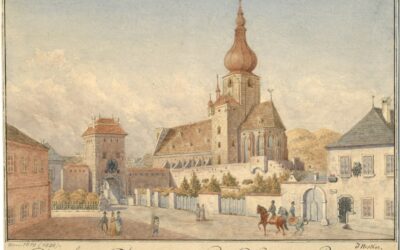
Constanze Mozart in Baden bei Wien
In the summer of 1791, Constanze Mozart sought refuge in Baden bei Wien to recover her health, while Mozart struggled with debts and distance. Behind the healing baths lay tensions—her growing bond with Süssmayr, suspicions, and letters full of longing. Brockmeyer’s account uncovers Constanze’s final summer with Mozart: a world of loss, resilience, and the end of innocence on the eve of tragedy.
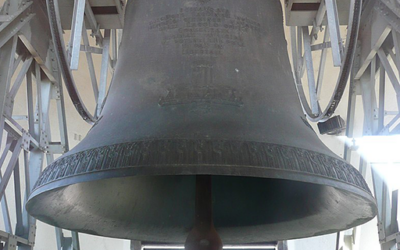
The Echo of the Pummerin Bell
The powerful resonance of the Pummerin bell in Vienna may have influenced Mozart’s compositions, particularly Sarastro’s arias in The Magic Flute.

The Hidden Influence of Joseph Boulogne, Chevalier de Saint-George
Joseph Boulogne, known as the “Black Mozart”, was shaping the future of music while Mozart was still struggling for recognition in Paris. But history has buried the significant influence Saint-George had on Mozart’s career, erasing his pioneering style from the narrative.
The Forgotten Viennese Quartets
Attributing Offertorium K.34 to Mozart is not just misleading, it reflects the careless methods used by 19th-century scholars to inflate his legacy. Without an autograph or solid evidence, this work should not be considered part of his output.”
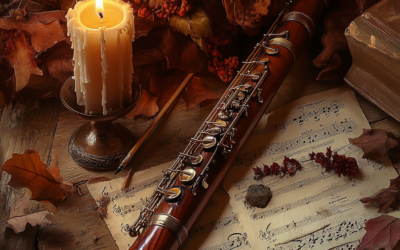
Mozart’s Bassoon Concerto: A Question of Authorship
The Bassoon Concerto K.191 raises more questions than it answers. Long thought to have been composed for a Munich bassoonist, new evidence suggests Mozart had no clear performer in mind. The concerto’s disjointed movements and other dubious compositions attributed to Mozart add further complexity to his legacy
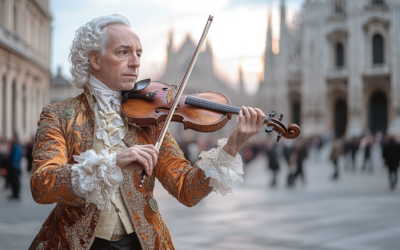
The Uncertain Origins of Mozart’s Early String Quartets
Mozart’s so-called “Milanese Quartets” (K.155, 158, and 159) have long been subject to debate, primarily due to their ambiguous instrumentation and structural weaknesses. Were these works part of a larger series of orchestral divertimenti, hastily repurposed as string quartets? The answer remains elusive, reflecting the young composer’s struggles to find his own voice.

Simplicity, Errors, and the Myth of Perfection
Mozart’s canons are not as complex as often claimed, with notable errors in K.553 and K.554, and the myth of “V’amo di cuore teneramente” K.348 being debunked.
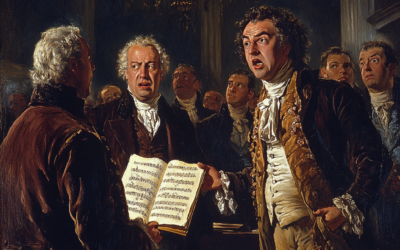
When the Myth Collapsed
Vienna exposed the myth: La Finta semplice was riddled with errors, and Wolfgang’s supposed opera genius was nothing more than Leopold’s fabrication. With their reputation in ruins, father and son turned to Italy, hoping to rewrite history.