
Mozart’s Serenade? A New Discovery? Really?
A Controversial Finding in Leipzig Raises Questions About Mozart’s Authenticity
In Leipzig, what was thought to be a new autograph of Mozart turned out to be a questionable copy. Why are such rushed attributions so common for Mozart, and why is it so hard to correct them when proven false?
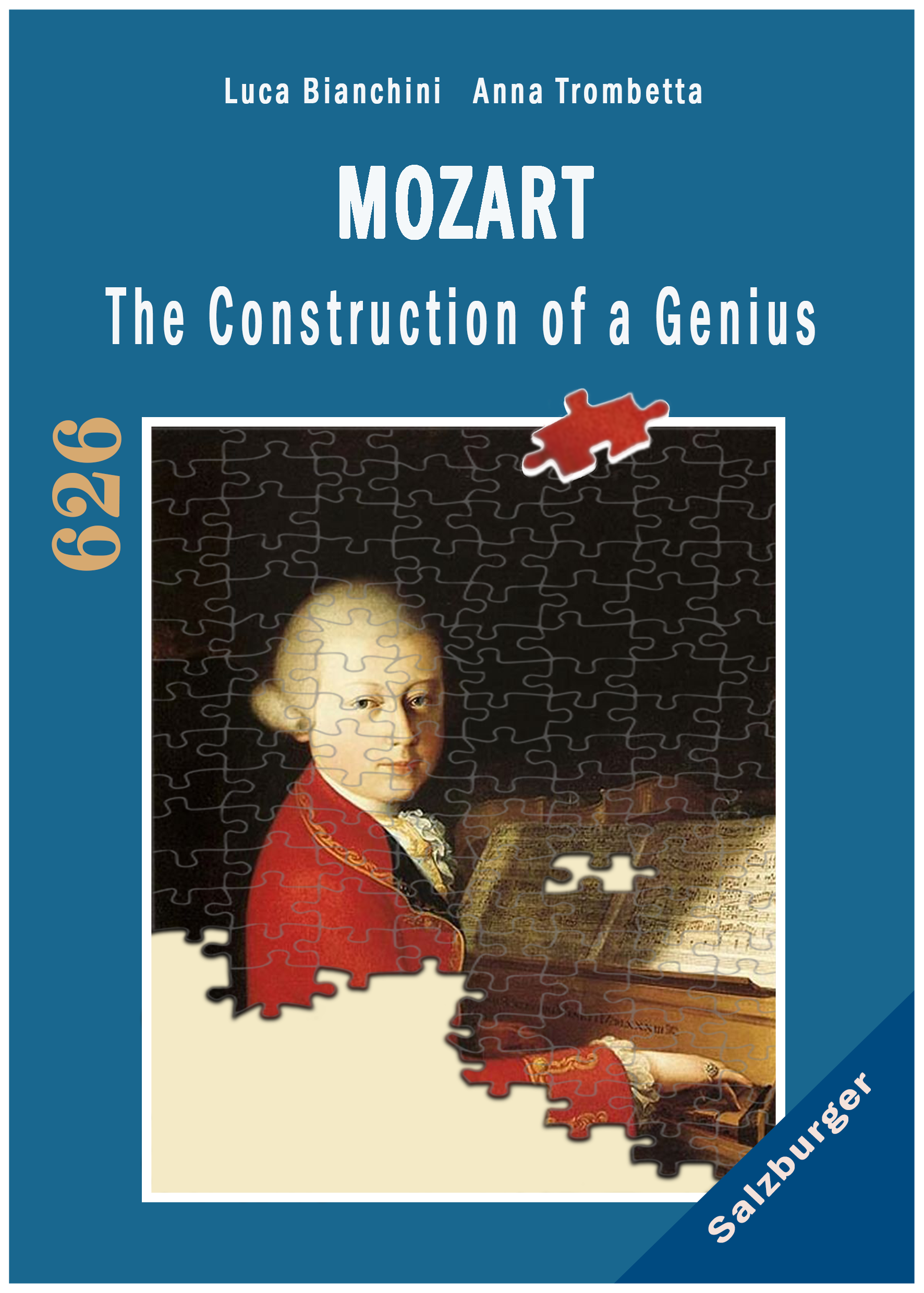
Mozart: The Construction of a Genius
This book offers a fresh and critical look at the life of Wolfgang Amadeus Mozart, challenging the myths that have surrounded him for centuries. We strip away the romanticised image of the “natural genius” and delve into the contradictions within Mozart’s extensive biographies. Backed by nearly 2,000 meticulously sourced citations, this work invites readers to explore a deeper, more complex understanding of Mozart. Perfect for those who wish to question the traditional narrative, this biography is a must-read for serious music lovers and historians.
"The trouble with fiction is that it makes too much sense, whereas reality never makes sense."
Aldous Huxley
Did Leipzig really uncover a new autograph of Mozart? Not quite. What they found was a copy, and even its dating is questionable. The discussions I’ve come across seem more like speculation, but repeating them doesn’t make them true.
At first glance, the title page might make you think it’s by Mozart, but the piece was actually written by an anonymous copyist about twenty years later—assuming that theory is even accurate. Looking at the title page, the supposed author is a certain “Wofgang” (without the L!).
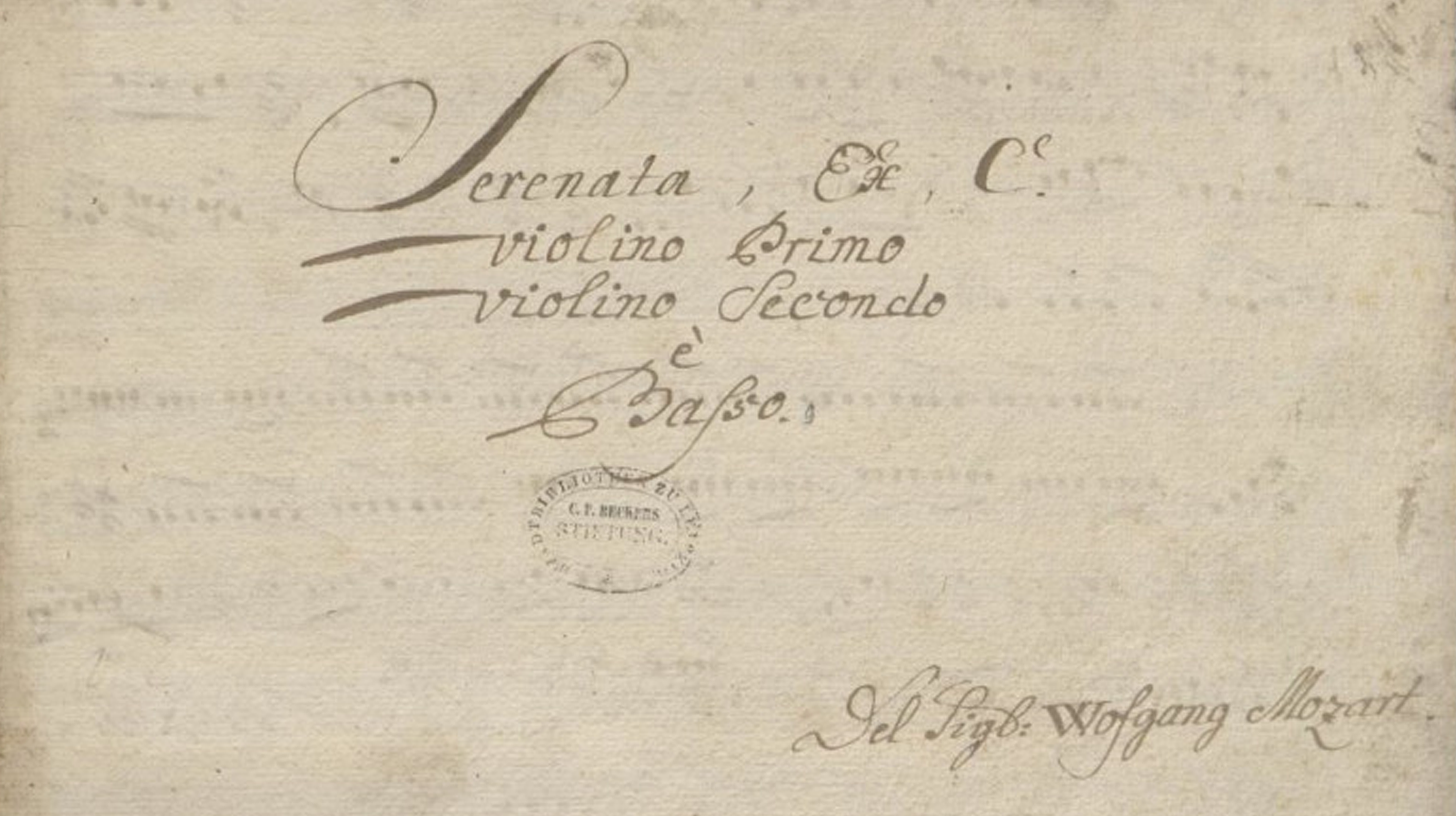
How can we trust an attribution when the name itself is misspelled? For all we know, the music could have been written by his sister, his aunt, or perhaps even a close friend of Leopold. Essentially, anyone.
Without an autograph, a date, a place, or even the correct name, it was almost predictable that this would be quickly absorbed into the Köchel catalogue of Mozart’s works as another “authentic” piece. It’s fascinating to see how eagerly such attributions are made, especially for a figure as iconic as Mozart.
There’s never this kind of urgency when a work, once attributed to Mozart, turns out to have been written by someone else. In those cases, the opposite happens. Once a piece enters the catalogue, it rarely gets removed, even when the evidence clearly shows it’s a forgery.
You May Also Like

The Curious Case of Mozart’s “Lullaby”
Though long credited to Mozart, the lullaby “Schlafe mein Prinzchen, schlaf ein” hides a murky history. Initially published by Nissen, Constanze’s second husband, it has endured as one of Mozart’s supposed works—despite a trail of doubts. In 1798, Constanze herself noted sending “another piece of Mozart’s in place of the lullaby,” raising questions about its origins. By the 20th century, researchers revealed it as the work of lesser-known composers, yet it remains deceptively tied to Mozart, its myth surviving through mere footnotes.
The Contradictions Behind Mozart’s Horn Concerto K.412
The authenticity of Mozart’s Horn Concerto K.412 remains hotly debated, as the work bears numerous contradictions in its manuscript history. The first movement may be original, but what about the rest? The inclusion of Franz Xaver Süssmayr and later editorial meddling raises serious questions about what we are really listening to when we hear this ‘Mozart’ concerto.
The Questionable Attribution of Mozart’s Offertorium K.34
Attributing Offertorium K.34 to Mozart is not just misleading, it reflects the careless methods used by 19th-century scholars to inflate his legacy. Without an autograph or solid evidence, this work should not be considered part of his output.”

The Mysterious Case of Mozart’s Duets: An Unfinished Story
Mozart’s string duets have long been shrouded in mystery, from his father’s heavy influence in 1768 to his supposed act of charity for a dying Michael Haydn in 1783. These unfinished works reveal more about the composer’s life and struggles than they do about his musical genius.
The Misattribution of Mozart’s K.2 89a (K.6 73i): A Questionable Canon
K.2 89a (K.6 73i), attributed to Mozart, is riddled with issues—missing voices, incomplete harmonies, and even the absence of text. Should this piece really be in his catalogue?

The Borrowed Simplicity: Mozart’s Canons K.555, K.557, and K.562
The canons K.555, K.557, and K.562, often overlooked for their simplicity, reveal striking similarities with the works of Antonio Caldara. These three pieces, dated 1788, demonstrate how Mozart adapted and simplified Caldara’s contrapuntal structures, masking his influences while reflecting the galant style of the era.