
Leopold Mozart
A Portrait in Shadows
Leopold Mozart, father of the famed Wolfgang, led a life filled with missed opportunities, deceptions, and an unrelenting quest for recognition.
From his university expulsion for negligence to his web of lies to secure marriage approval,
Leopold’s life unfolded in a pattern of ambition and pettiness, casting an unsettling light on a man whose moral uprightness was, at least outwardly, his badge of honour.
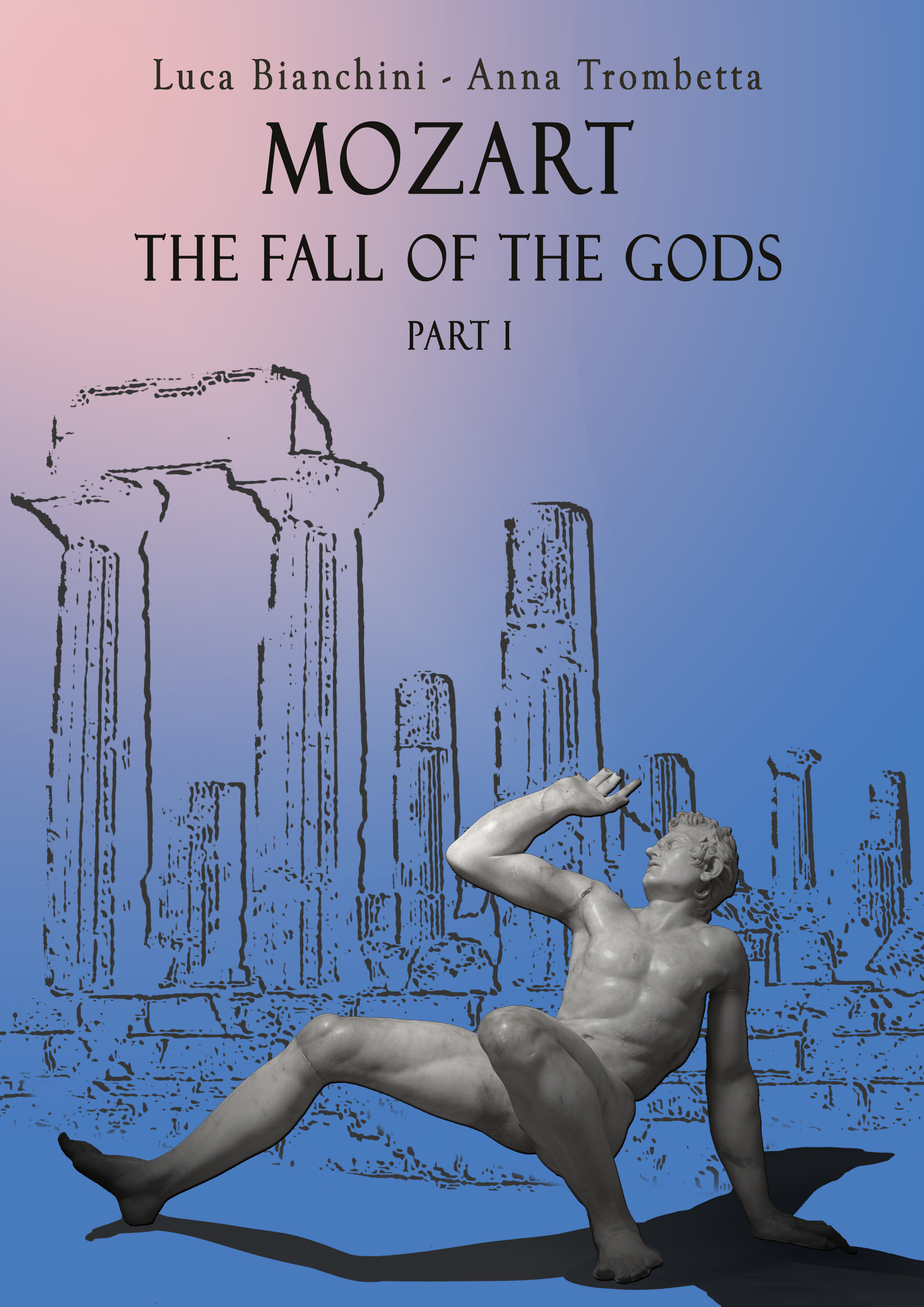
Mozart: The Fall of the Gods
This book compiles the results of our studies on 18th-century music and Mozart, who has been revered for over two centuries as a deity. We dismantle the baseless cult of Mozart and strip away the clichés that falsely present him as a natural genius, revealing the contradictions in conventional biographies. In this work, divided into two parts, we identify and critically analyze several contradictory points in the vast Mozart bibliography. Each of the nearly 2,000 citations is meticulously sourced, allowing readers to verify the findings. This critical biography of Mozart emerges from these premises, addressing the numerous doubts raised by researchers.
"One cannot help but admire a man who could lie so boldly, even about his own father’s death, just to secure a better future."
Mozart: The Fall of the Gods
The Father of Wolfgang Mozart: Ambitions, Deceptions, and a Life of Humiliation and Compromise.
A Ribellious Youth
Leopold Mozart was far from the upright figure he liked to project, and his early years bear witness to this fact. Born in Augsburg, the son of a bookbinder, Leopold might have followed his father’s craft. Yet, with the pretence of an ecclesiastical calling, he deceived his father and enrolled at the University of Salzburg, benefiting from the hospitality of the Benedictines. However, his tenure there was short-lived: despite a promising first year, he was soon reprimanded for neglect and was unceremoniously expelled in 1739.
The Deceptive Path to Marriage
Years later, Leopold continued his pattern of deceit. Having fallen for Anna Maria Pertl, a young woman of humble origins, he sought his mother’s approval for the marriage and even requested an advance on her dowry. In his appeal to the Augsburg city council, he presented a wholly fabricated story: he claimed his father had recently sent him to Salzburg to study, and that he was now gainfully employed as a “valet” for a high-ranking noble. He further asserted that his bride-to-be was the daughter of a wealthy citizen, a fiction as bold as it was unfounded. Solomon remarks on the audacity of Leopold’s claims, pointing out that his father was, in fact, already deceased, that Anna Maria had no affluent lineage, and that Leopold held no such prestigious employment.
A Life of Discontent and Humiliation
Leopold’s struggle for recognition in Salzburg brought him only disillusionment. Though he served in the court orchestra, he never ascended beyond the rank of Deputy Kapellmeister. In 1753, his career nearly ended in disaster due to an anonymous pamphlet he had circulated, ridiculing several prominent ecclesiastics. His punishment was public and humiliating: he was forced to beg forgiveness, and the pamphlet was symbolically torn to pieces at his feet.
The ‘Virtuous’ Father
Despite his troubled path, Leopold clung to the veneer of a righteous, disciplined man—a character description belied by his actions. His son Wolfgang’s musical prodigy brought him some satisfaction, yet Leopold’s own life was steeped in compromise and disappointment. Florian Langegger, a contemporary, commented on Leopold’s strained family relations, including his troubled dealings with his mother, whom he blamed for supporting his other siblings while doubting his loyalty.
You May Also Like
The Fabricated Childhood of Mozart
The legend of young Mozart’s divine genius crumbles under scrutiny, revealing a childhood dictated by Leopold’s ambition, carefully constructed myths, and a relentless pursuit of fame at the expense of genuine artistic education.

The Man Behind the Myth
Leopold Mozart’s legacy has been shaped by myths and hagiographies, but his letters reveal a man more concerned with financial gain and self-promotion than artistic integrity. Was he truly a devoted father, or simply an opportunist?

Constanze vs. The Catholic Church
For over two centuries, scholars have debated the circumstances surrounding Mozart’s burial. Constanze Mozart’s supposed inability to mark his grave, the confrontation with the Catholic Church over funeral masses, and the baffling disappearance of Mozart’s body all contribute to a mystery stranger than fiction. Did a powerful group keep her silent? And what really happened to Mozart’s remains?

Constanze Mozart’s Enduring Love
Although some have doubted her devotion, Constanze’s own words and actions illustrate a widow deeply committed to preserving Mozart’s legacy. Diaries, personal correspondence, and eyewitness testimony all challenge the notion that she neglected his memory—while the circumstances around his burial grow ever more perplexing.

A Revealing New Interview on His Thematic Catalogue
We’re excited to present a brand-new interview that challenges many of the long-held assumptions about Mozart’s Thematic Catalogue (1784–1791). Conducted by Swedish journalist Henry Grynnsten, this conversation delves into groundbreaking forensic techniques—like advanced ink analysis and digital image processing—that may change the way we view Mozart’s late works.
The Rattling Symphony: A Critical Take on K. 17
Often attributed to Mozart, the K. 17 symphony is anything but refined. Lacking orchestration and filled with gaps, it raises more questions than answers about its true authorship.