
Constanze Mozart in Baden bei Wien
🌿 A Spa Town, a Farewell, a Mystery
By H. S. Brockmeyer
In the summer of 1791, Constanze Mozart sought refuge in Baden bei Wien to recover her health, while Mozart struggled with debts and distance. Behind the healing baths lay tensions—her growing bond with Süssmayr, suspicions, and letters full of longing. Brockmeyer’s account uncovers Constanze’s final summer with Mozart: a world of loss, resilience, and the end of innocence on the eve of tragedy.
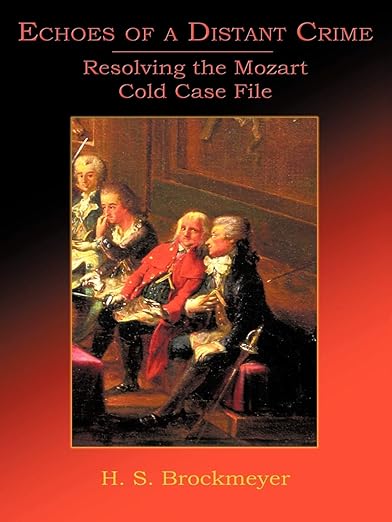
"You cannot imagine how I have been aching for you all this long while. I can’t describe what I have been feeling — a kind of emptiness, which hurts me dreadfully."
Abstract
In the summer of 1791, just months before Wolfgang Amadeus Mozart’s untimely death, his wife Constanze took refuge in the serene spa town of Baden bei Wien. Sent there to recover from illness and a difficult pregnancy, she became a regular at the famed thermal baths. Yet behind the healing waters and peaceful walks lay a deeper, more turbulent story: suspicions, secrets, and a final summer that would never return. In this vivid and historically rich account, H. S. Brockmeyer reconstructs Constanze’s last months with Mozart, her relationship with Franz Xaver Süssmayr, and the layered emotional world of a woman poised between love, loss, and survival.
Baden bei Wien: The Healing Retreat
Constanze Mozart first visited Baden in 1789 after a fall and illness. Prescribed 60 thermal baths by her physician, she returned there every summer through 1791. The spa town, with its Roman origins and sulphurous springs, became her sanctuary — a place to escape the oppressive heat and stress of Vienna, and later, the site of deeply personal events that would define her final summer with Mozart.
A Composer on the Road
While Constanze recovered in Baden, Mozart embarked on a concert tour with Prince Lichnowsky, hoping for financial relief. Despite noble receptions and musical success, the tour ended in disappointment. Mozart blamed Lichnowsky for debts and poor concert returns, noting bitterly: “From the point of view of applause and glory this concert was absolutely magnificent, but the profits were wretchedly meagre.”
“Find Her a Ground-Floor Room”
Mozart was attentive even from afar. In a letter to Anton Stoll, he requested an apartment for Constanze close to the baths, preferably “on the ground floor.” Her accommodation was eventually secured on Renngasse — today still known as the “Mozart Hof”. There, Mozart composed the Ave verum corpus in June 1791 and often joined his wife for brief visits, working in a garden attic room.
Letters from a Lonely Genius
Throughout the summer, Mozart’s letters to Constanze reveal emotional strain, health concerns, and deep longing. He fretted over her bathing routines, warned against slippery floors, and lamented the distance that separated them: “Even my work gives me no pleasure… because I am accustomed to stop working now and then and exchange a few words with you.”
Shadows in Paradise: The Süssmayr Affair
One shadow loomed large: Franz Xaver Süssmayr. As Mozart’s copyist and frequent companion to Constanze, his presence in Baden sparked both suspicion and jealousy. Mozart’s letters oscillate between humor and hostility: “Give Süssmayr a few sound boxes on the ear from me… it would be a good thing if you were to leave a bump on his nose.”
Later biographers — including Wolfgang Hildesheimer — have questioned the nature of Constanze’s relationship with Süssmayr. Her own words, years later, suggest a complex, possibly bitter end to their connection.
A Town of Echoes and Memories
Brockmeyer describes Baden in rich detail — its leafy parks, the women’s bathhouse (now a museum), the Rosarium with 800 varieties of roses. She imagines Constanze wandering through ruins, gathering wildflowers, resting under trees, and savoring moments of calm before everything changed.
Paradise Lost
Mozart died on 5 December 1791. Süssmayr, present at his deathbed, vanished shortly after — never to return to Constanze’s life. In the aftermath, her letters show bitterness and avoidance, while he pursued his career. Whatever bond had formed in Baden, it evaporated with the winter frost.
Final Reflections
Constanze’s spa retreat was not just about health. It was about escape, identity, and perhaps the last flicker of freedom before tragedy and reinvention. In Brockmeyer’s hands, this story becomes more than biography — it becomes a portrait of a woman at the threshold of history.
You May Also Like

The Man Behind the Myth
Leopold Mozart’s legacy has been shaped by myths and hagiographies, but his letters reveal a man more concerned with financial gain and self-promotion than artistic integrity. Was he truly a devoted father, or simply an opportunist?

Constanze vs. The Catholic Church
For over two centuries, scholars have debated the circumstances surrounding Mozart’s burial. Constanze Mozart’s supposed inability to mark his grave, the confrontation with the Catholic Church over funeral masses, and the baffling disappearance of Mozart’s body all contribute to a mystery stranger than fiction. Did a powerful group keep her silent? And what really happened to Mozart’s remains?

Constanze Mozart’s Enduring Love
Although some have doubted her devotion, Constanze’s own words and actions illustrate a widow deeply committed to preserving Mozart’s legacy. Diaries, personal correspondence, and eyewitness testimony all challenge the notion that she neglected his memory—while the circumstances around his burial grow ever more perplexing.
A Revealing New Interview on His Thematic Catalogue
We’re excited to present a brand-new interview that challenges many of the long-held assumptions about Mozart’s Thematic Catalogue (1784–1791). Conducted by Swedish journalist Henry Grynnsten, this conversation delves into groundbreaking forensic techniques—like advanced ink analysis and digital image processing—that may change the way we view Mozart’s late works.
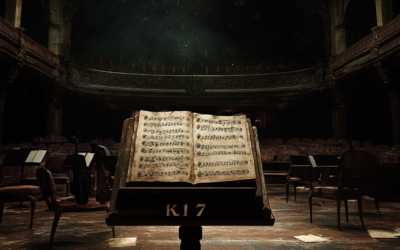
The Rattling Symphony: A Critical Take on K. 17
Often attributed to Mozart, the K. 17 symphony is anything but refined. Lacking orchestration and filled with gaps, it raises more questions than answers about its true authorship.
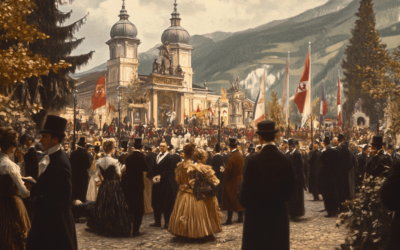
The Hidden Origins of the Salzburg Festival: A Nationalist Dream
The Salzburg Festival, far from being a mere celebration of Mozart’s genius, was born out of nationalist ambitions during a turbulent period in Austro-German history. Conceived by figures like Max Reinhardt, Heinrich Damisch, and Friedrich Gehmacher, the festival was deeply rooted in ultranationalistic ideals, transforming Mozart’s legacy into a tool for cultural dominance. The truth behind its founding has long been obscured, but the primary sources tell a different, darker story.