
Australian Scholars Confirm Mozart Catalogue Forgery
They support our findings on the falsification of Mozart’s works.
Professor Martin Jarvis of Darwin University, alongside forensic expert Professor Heidi H. Harralson, confirmed our long-held findings that Mozart’s personal catalogue is a forgery during his recent lecture The Mozart Scam. Forensic analysis continues to unravel the myths surrounding Mozart’s legacy.
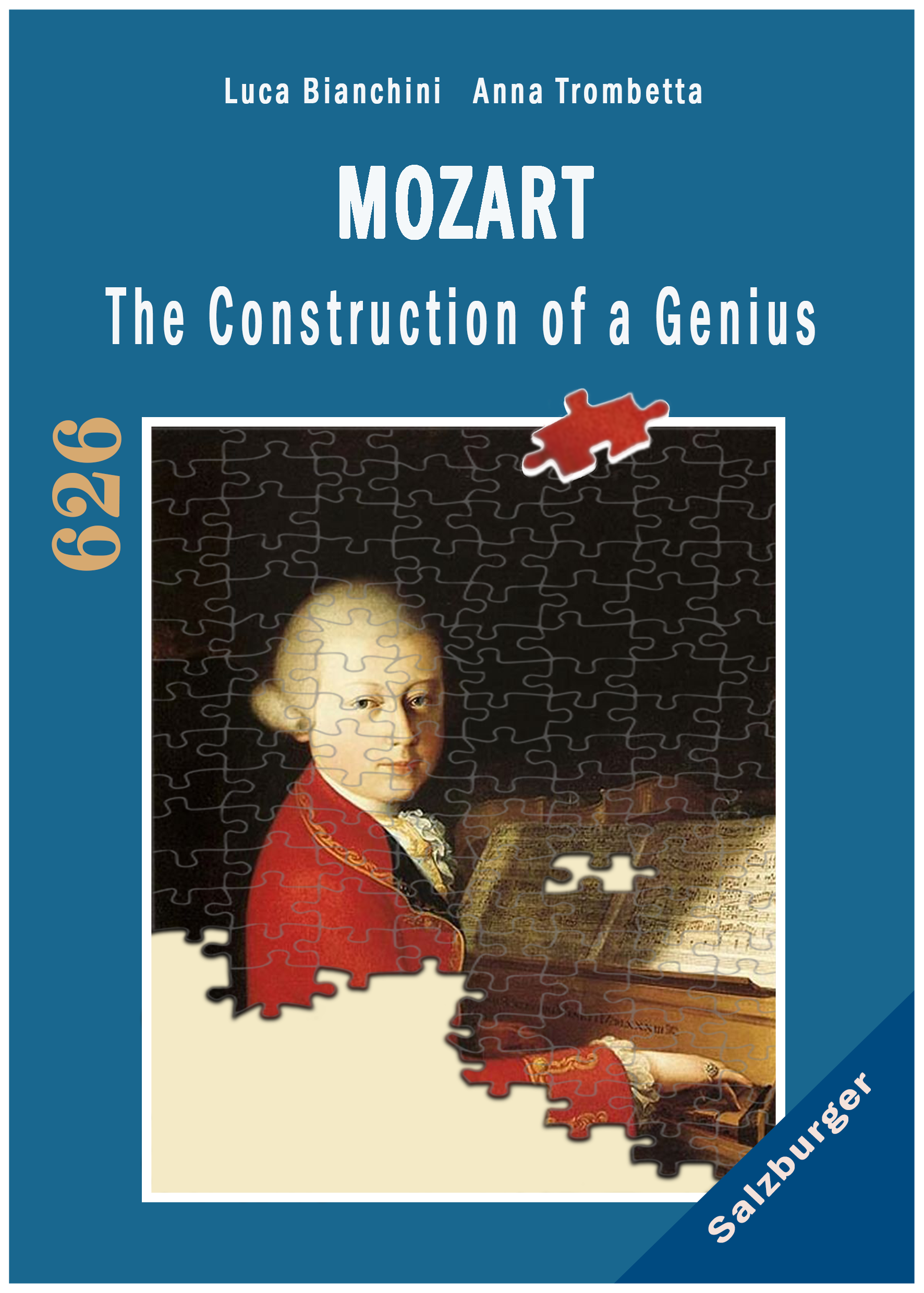
Mozart: The Construction of a Genius
This enlightening volume deciphers the myriad of myths enshrouding Wolfgang Amadeus Mozart, shedding light on how portrayals of his genius have been manipulated for diverse purposes. It explores the transition of Mozart’s image from a means to mitigate Constanze’s financial distress to a representation of national valour and, subsequently, a commercial label, demonstrating how his myth has morphed through the ages.What dynamics post-1791 contributed to the moulding of Mozart’s lasting myth? This pivotal work by scholars Luca Bianchini and Anna Trombetta delves into biographical facts, musical compositions, and pertinent writings to unveil a disconcerting reality: the esteemed Mozart’s Thematic Catalogue, spanning February 9th, 1784, to November 15th, 1791, is an intricate forgery from the late 18th century.This revelation is corroborated by the scholarly paper ‘A Questionable Catalogue’, presented by the authors in October 2023 at the 21st International Conference of the Graphonomics Society at the University of Évora, Portugal.
"I am delighted that our research has provided evidence to support the proposition, made by Luca Bianchini and Anna Trombetta, that the Thematic Catalogue is not what it purports to be; we have concluded that it is a counterfeit document."
Professor Martin Jarvis
In an exciting development from Australia, Professor Martin Jarvis of Darwin University recently delivered a groundbreaking lecture titled The Mozart Scam, where he addressed the forensic investigation into the authenticity of Mozart’s handwriting. During this prestigious conference, Jarvis mentioned our research and praised our books, Mozart: The Fall of the Gods and Mozart: The Construction of a Genius, for shedding light on the myths surrounding Mozart’s legacy.
Jarvis’s lecture explored his collaborative work with forensic handwriting expert Professor Heidi H. Harralson of East Tennessee State University. Together, they have conducted an in-depth analysis of Mozart’s violin concertos, revealing that the dates of these works had been altered, and two of the concertos are not autographs by Mozart, as previously thought. This supports the findings in our earlier publications, confirming that many elements of Mozart’s legacy are based on false assumptions.
Their forensic analysis of the personal catalogue attributed to Mozart from 1784 to 1791 also confirmed what we have long argued—the catalogue is a forgery. These results, which align with our own research first presented in Mozart: The Fall of the Gods, are backed by independent studies conducted across Europe and beyond, including advanced computer data analysis from Prague.
This convergence of findings from both Europe and Australia only strengthens the case for a reevaluation of Mozart’s legacy, which has been inflated over time. As Jarvis and his colleagues continue to scrutinise the historical evidence with forensic rigour, more truths about Mozart’s life and works are being revealed, supporting the conclusions we reached years ago.
You May Also Like
The Fabricated Childhood of Mozart
The legend of young Mozart’s divine genius crumbles under scrutiny, revealing a childhood dictated by Leopold’s ambition, carefully constructed myths, and a relentless pursuit of fame at the expense of genuine artistic education.

The Man Behind the Myth
Leopold Mozart’s legacy has been shaped by myths and hagiographies, but his letters reveal a man more concerned with financial gain and self-promotion than artistic integrity. Was he truly a devoted father, or simply an opportunist?

Constanze vs. The Catholic Church
For over two centuries, scholars have debated the circumstances surrounding Mozart’s burial. Constanze Mozart’s supposed inability to mark his grave, the confrontation with the Catholic Church over funeral masses, and the baffling disappearance of Mozart’s body all contribute to a mystery stranger than fiction. Did a powerful group keep her silent? And what really happened to Mozart’s remains?

Constanze Mozart’s Enduring Love
Although some have doubted her devotion, Constanze’s own words and actions illustrate a widow deeply committed to preserving Mozart’s legacy. Diaries, personal correspondence, and eyewitness testimony all challenge the notion that she neglected his memory—while the circumstances around his burial grow ever more perplexing.
A Revealing New Interview on His Thematic Catalogue
We’re excited to present a brand-new interview that challenges many of the long-held assumptions about Mozart’s Thematic Catalogue (1784–1791). Conducted by Swedish journalist Henry Grynnsten, this conversation delves into groundbreaking forensic techniques—like advanced ink analysis and digital image processing—that may change the way we view Mozart’s late works.
The Rattling Symphony: A Critical Take on K. 17
Often attributed to Mozart, the K. 17 symphony is anything but refined. Lacking orchestration and filled with gaps, it raises more questions than answers about its true authorship.